You Won’t Believe What This Brazilian City’s Architecture Can Do
Curitiba, Brazil, isn’t just another stop on the map—it’s a visual revolution. I never expected a city to reshape how I see urban design, but its architecture? Absolutely mind-blowing. From futuristic civic buildings to green-integrated spaces, every corner tells a story of innovation. This is urban planning with soul, where form meets function in the most unexpected ways. More than a collection of buildings, Curitiba is a living laboratory of thoughtful design—where sustainability, culture, and community are not afterthoughts, but the foundation of every structure. It’s a city that proves beauty doesn’t have to come at the cost of practicality, and progress doesn’t require sacrificing identity.
First Impressions: A City That Thinks Differently
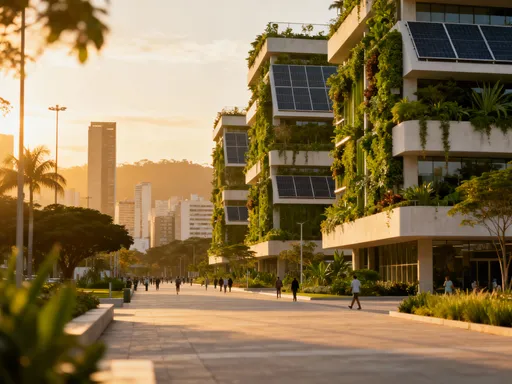
Arriving in Curitiba, the first thing that strikes visitors is the absence of visual chaos. Unlike many rapidly growing Latin American cities marked by haphazard development and traffic-choked streets, Curitiba unfolds with intention. The skyline is uncluttered, the streets orderly, and the air feels lighter—partly due to the abundance of greenery, but also because of a clear architectural philosophy that values clarity over clutter. Clean lines define public buildings, vertical gardens climb the sides of parking structures, and wide pedestrian promenades invite slow, mindful movement. There’s a rhythm to the city, a sense that someone thought deeply about how people live, move, and connect within urban space.
This coherence is no accident. It is the legacy of urban planner and former mayor Jaime Lerner, whose visionary leadership in the 1970s and 1980s redefined what a mid-sized city could achieve. Lerner championed a model of urban development rooted in efficiency, sustainability, and human scale. His most famous innovation—the Bus Rapid Transit (BRT) system, known locally as the Rede Integrada de Transporte—was not just a transportation solution but a spatial catalyst. By designing tube-shaped stations and dedicated lanes, he reshaped the city’s growth patterns, encouraging vertical development along transit corridors and reducing dependence on cars. The result? A city that functions like a well-orchestrated symphony, where movement, design, and environmental care are harmonized.
Lerner’s influence extends beyond infrastructure. He believed that urban design should reflect civic pride and responsibility. This ethos is visible in the way public spaces are maintained, how buildings incorporate public art, and how even modest neighborhoods benefit from thoughtful planning. In Curitiba, architecture is not reserved for the elite—it is a public good. The city’s layout reflects a deep respect for its residents, offering accessible parks, clean air, and a sense of order that fosters safety and belonging. For a visitor, the impression is immediate: this is a city that thinks ahead, not just about buildings, but about people.
The DNA of Design: Modernism Meets Sustainability
At the heart of Curitiba’s architectural identity is a seamless fusion of modernist aesthetics and ecological intelligence. The city does not treat sustainability as a trend or a checkbox; it is embedded in the very DNA of its design. This is evident in iconic structures like the Ópera de Arame, or Wire Opera, a striking open-air concert hall built from steel tubing and translucent fabric. Nestled within the lush grounds of Passeio Público, the city’s oldest park, the opera house appears almost weightless, blending industrial materials with natural surroundings. Its transparency allows audiences to see the trees swaying during performances, creating a unique dialogue between art and environment.
Equally emblematic is the greenhouse at the Botanical Garden, a majestic glass dome inspired by London’s Crystal Palace. Its geometric precision and iron latticework speak to early 20th-century modernism, yet its function is deeply contemporary. Inside, the controlled climate supports a diverse collection of native and exotic plants, serving both educational and conservation purposes. The building itself acts as a symbol: a marriage of historical design and modern environmental stewardship. What sets Curitiba apart is that such structures are not isolated showpieces—they are part of a broader urban strategy where every building contributes to the city’s ecological and social well-being.
Materials are chosen with purpose. Recycled steel, locally sourced timber, and energy-efficient glass are standard in public projects. Rooftop solar panels, rainwater harvesting systems, and natural ventilation are integrated into civic buildings, reducing energy consumption without compromising elegance. Even the city’s administrative centers are designed to minimize environmental impact, using orientation, shading, and green walls to regulate temperature. This is not architecture for spectacle—it is architecture for service. Every curve, every pane of glass, every beam serves a dual purpose: to inspire and to function. In Curitiba, beauty is not layered on top of utility; it emerges from it.
Green as a Design Principle, Not an Afterthought
In most cities, green spaces are additions—parks squeezed between buildings or rooftops retrofitted with plants. In Curitiba, green is a foundational design principle. The city’s planners understood early on that environmental resilience and urban livability are inseparable. This insight shaped a network of 28 urban parks and 16 conservation areas, many of which are directly integrated with public buildings and transportation nodes. The Barigui Park, for instance, is not just a recreational space; it doubles as a flood retention basin, its lakes and wetlands absorbing excess rainwater during storms. The park’s design prevents flooding in downstream neighborhoods while offering residents a place for walking, cycling, and community events.
Green roofs are common on civic centers and schools, reducing urban heat and supporting biodiversity. Tree-lined avenues, such as Avenida Batel and Rua XV de Novembro, are more than scenic—they form part of a citywide canopy that cools the air, filters pollution, and reduces noise. These elements are not decorative; they are engineered solutions to real urban challenges. The city’s approach to waste management further illustrates this integration. The 'Green Exchange' program, launched in the 1990s, allows residents in low-income neighborhoods to trade recyclable materials for bus tickets, food, or school supplies. This initiative not only improved waste collection rates but also connected environmental action with social equity.
Even the BRT stations contribute to the city’s green identity. Many are surrounded by gardens and shaded by native trees, turning transit stops into small oases. The stations themselves are designed for natural light and airflow, reducing the need for artificial lighting and cooling. This holistic approach—where transportation, waste, energy, and green space are designed as interconnected systems—has made Curitiba a model for sustainable urbanism. Other cities may add green features; Curitiba builds them in from the start. The result is a city that breathes, adapts, and sustains itself in ways that feel both innovative and timeless.
Cultural Hubs Reimagined: From Old Factories to Art Spaces
One of the most inspiring aspects of Curitiba’s architecture is its commitment to adaptive reuse. Rather than demolishing outdated industrial sites, the city transforms them into vibrant cultural centers. A prime example is the CIC – Parque Barigui, a sprawling complex built on the site of a former Renault automobile factory. Once a symbol of industrial production, the site now hosts theaters, exhibition halls, libraries, and educational workshops. The original factory structures have been preserved and repurposed, their steel frames and brick walls standing as a testament to the city’s industrial past while serving new civic functions.
This transformation is more than physical—it’s cultural. The CIC (Centro Integrado de Cultura) is not a museum frozen in time; it is a living space where residents attend dance performances, art classes, film screenings, and community meetings. The design encourages exploration, with open courtyards, glass walkways, and flexible performance areas that adapt to different events. Children play in interactive science exhibits, while elders gather in quiet reading rooms. The space belongs to everyone, reflecting Curitiba’s belief that culture should be accessible, not exclusive.
Other industrial sites have undergone similar rebirths. The old railway warehouses near the central station now house design studios and craft markets, while disused water treatment plants have been converted into environmental education centers. These projects do more than save buildings—they preserve collective memory. By retaining the textures and forms of the past, Curitiba maintains a sense of continuity and identity. At the same time, the new uses reflect contemporary values: creativity, inclusion, and lifelong learning. Adaptive reuse is not just an architectural choice; it’s a statement of values. It says that progress does not require erasing history, but reimagining it for a new generation.
Neighborhood Identity Through Building Style
While Curitiba has a unified urban vision, it does not feel homogenized. Each neighborhood maintains a distinct architectural character, shaped by cultural heritage, geography, and community input. Santa Felicidade, for example, is a historic district founded by Italian immigrants, where red-tiled roofs, stucco walls, and wrought-iron balconies evoke the villages of northern Italy. The streets are lined with family-run restaurants serving traditional cuisine, and festivals like the Grape Festival celebrate the area’s winemaking roots. The architecture here is not a theme-park imitation; it is a living expression of cultural pride, maintained through careful zoning and community stewardship.
In contrast, the Batel district presents a modern skyline of glass and steel high-rises, home to offices, luxury apartments, and upscale shopping. Yet even here, design regulations ensure that new buildings respect scale and context. Setbacks, green terraces, and pedestrian plazas prevent the area from feeling overcrowded or impersonal. The transition between old and new is managed with care—historic facades are preserved, and new developments often incorporate design elements that echo the past, such as arched windows or textured masonry.
Street-level details further enrich the city’s architectural tapestry. Hand-painted tiles, known as *azulejos*, decorate public buildings and subway entrances, depicting local flora, historical scenes, and abstract patterns. Murals by local artists adorn the walls of underpasses and community centers, turning functional spaces into galleries. These elements are not imposed from above; many result from public art programs that invite residents to co-create their environment. The result is a city that feels both diverse and coherent—a place where identity is expressed through design, and where every neighborhood tells its own story.
Public Spaces as Social Architects
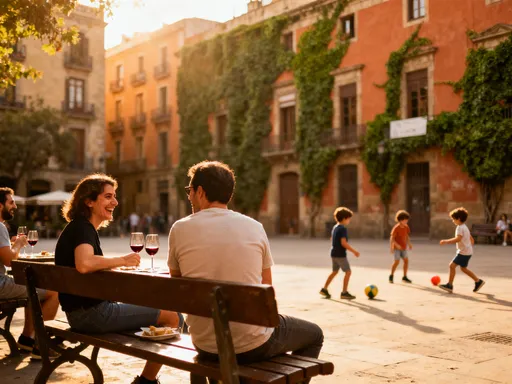
In Curitiba, architecture is not just about shelter or aesthetics—it is a tool for social connection. Public spaces are designed to bring people together, foster interaction, and strengthen community bonds. Largo da Ordem, a historic square in the city center, exemplifies this principle. Once a colonial administrative hub, it is now a lively gathering place where locals sip coffee at sidewalk cafés, browse artisan markets, and attend open-air concerts. The surrounding 19th-century buildings, with their neoclassical facades and shaded arcades, create a sense of enclosure and intimacy, making the space feel safe and welcoming.
Similarly, Praça Tiradentes, located near the old jail and courthouse, has been transformed from a symbol of authority into a space of civic engagement. Weekly book fairs, cultural performances, and community workshops animate the square, turning it into a hub of intellectual and artistic exchange. The design supports accessibility: wide ramps, tactile paving for the visually impaired, and ample seating ensure that people of all ages and abilities can participate. Even the lighting is carefully planned—soft and warm, encouraging evening use without glare or harsh shadows.
These spaces are not accidents of urban growth; they are the result of deliberate policy. Curitiba has systematically pedestrianized key areas, closing streets to cars and reclaiming space for people. The Rua XV de Novembro, once a busy thoroughfare, is now a car-free promenade lined with trees, benches, and performance stages. Studies have shown that such changes increase foot traffic, support local businesses, and improve mental well-being. More importantly, they create opportunities for spontaneous encounters—neighbors greeting each other, children playing, elders chatting on benches. In a world where digital life often replaces face-to-face interaction, Curitiba’s public spaces serve as vital anchors of human connection.
Why Curitiba’s Blueprint Matters Beyond Brazil
The lessons of Curitiba extend far beyond its city limits. In an era of rapid urbanization, climate change, and social fragmentation, its model offers a compelling alternative to the sprawl and congestion that plague so many cities. While metropolises like São Paulo or Mexico City struggle with traffic, pollution, and inequality, Curitiba demonstrates that even a city of 1.9 million can be livable, sustainable, and beautiful. Its success lies not in massive budgets or technological wizardry, but in holistic thinking—seeing the city as an interconnected system where transportation, housing, environment, and culture must work together.
Other cities have taken note. Bogotá adopted a version of the BRT system, while Medellín integrated cable cars and escalators into its hillside neighborhoods, inspired by Curitiba’s focus on accessibility. In Europe, cities like Copenhagen and Freiburg have embraced similar principles of green infrastructure and pedestrianization. Yet what makes Curitiba unique is its consistency and longevity. Its innovations were not short-term experiments but enduring policies, supported across political administrations and embraced by citizens.
For families, especially women who often manage household logistics and care for children and elders, Curitiba’s design offers tangible benefits: safe streets, clean air, accessible services, and welcoming public spaces. A mother can walk her child to school along a tree-lined path, knowing the route is well-lit and monitored. An older adult can take the bus to a cultural event without navigating stairs or confusing transfers. These are not minor conveniences—they are the building blocks of dignity and quality of life.
Curitiba’s architecture reminds us that cities are not just collections of buildings, but expressions of values. When design prioritizes people over cars, nature over concrete, and community over isolation, the result is not just functional—it is uplifting. The city’s skyline may not rival New York or Dubai, but its soul is deeper. It proves that innovation does not require excess, and beauty can grow from practicality. In a world searching for sustainable, humane urban models, Curitiba stands not as a utopia, but as a real, working example of what is possible. It invites us to reimagine our own communities—not as problems to be solved, but as possibilities to be shaped, one thoughtful design choice at a time.