Lost in the Fairy Tale: What No One Tells You About Sintra’s Hidden Districts
Nestled in the misty hills near Lisbon, Sintra is a dreamy escape of palaces, forests, and colorful streets that feel like they’ve leapt from a storybook. But behind its postcard-perfect charm lies a side few travelers see—the confusing layout, overcrowded zones, and easily missed neighborhoods that can turn magic into frustration. I’ve walked every winding lane, battled the tour groups, and discovered what Sintra really feels like beyond the hype. It’s not just about visiting castles; it’s about navigating a layered landscape where beauty and chaos coexist. This journey reveals the unseen rhythms of Sintra, guiding you to experience it not as a checklist, but as a living, breathing destination full of quiet corners and hidden truths.
The Illusion of Arrival: First Impressions vs. Reality
Stepping off the train in Sintra, travelers are greeted by a scene straight from a fantasy novel: pastel buildings clinging to green hills, bell towers piercing the mist, and the distant silhouette of a red-and-yellow palace peeking through the trees. The sensory overload is immediate and intoxicating. Yet within minutes, the spell begins to crack. The train station, though charming in design, becomes a bottleneck of confusion. Signs are inconsistent—some in Portuguese, others in English, many outdated. Tourists clutch paper maps or stare helplessly at unresponsive phones, trying to orient themselves amid a maze of exits, ticket kiosks, and snack stands.
The town center, just a short uphill walk, quickly reveals its duality. Cobblestone streets sparkle under morning light, lined with bakeries selling warm travesseiros and cafés offering frothy galão coffee. But these same streets are packed with tour groups moving in slow waves, blocking sidewalks and filling the air with loud chatter and camera shutters. Souvenir shops with identical wares—miniature castles, embroidered napkins, cork keychains—multiply at every turn, creating a sense of commercial saturation that contrasts sharply with the town’s fairy-tale image. What was promised as a serene retreat often feels more like a crowded bazaar.
Social media plays a powerful role in shaping these expectations. Instagram feeds flood with golden-hour shots of Pena Palace, serene forest paths, and quiet plazas—images that rarely include the reality of long lines, aggressive vendors, or the sheer physical effort required to move between sites. This curated perfection sets an unrealistic standard. Many visitors arrive expecting tranquility and find themselves disoriented, overwhelmed, and emotionally drained before they’ve even begun their tour. The key to avoiding this mismatch lies in preparation: understanding that Sintra’s beauty is real, but so are its logistical challenges. Managing expectations from the start allows for a more grounded, enjoyable experience.
One of the most common missteps is assuming that Sintra is a single, compact destination. In truth, it is a collection of districts spread across steep terrain, each with its own rhythm and character. The historic center, while picturesque, is just one piece of a much larger puzzle. Without a clear plan, travelers often waste precious time circling the same streets, missing quieter areas that offer a more authentic glimpse into daily life. Recognizing this complexity early can transform a frustrating day into a meaningful exploration.
Pena Palace Hype: Navigating the Most Instagrammed Pitfall
No symbol captures Sintra’s allure quite like Pena Palace. Its vibrant façade—swirling in shades of red, yellow, and blue—crowns the highest hill in the region, visible from miles away. It is, without question, one of Europe’s most photographed landmarks. But popularity comes at a cost. On any given day, especially during peak season, thousands of visitors flock to its gates, creating bottlenecks at ticket booths, shuttle stops, and entry points. The dream of a peaceful morning among romantic turrets and whispering gardens often dissolves into a test of patience.
The journey to the palace itself presents the first hurdle. While the uphill walk is scenic, it is steep and poorly shaded, with no benches or water stations along the way. Most travelers opt for the shuttle bus, which runs from the center of town. However, the queue for these buses can stretch to over an hour, with limited seating and frequent delays. The ride, though short, is slow and crowded, adding to the sense of being funneled through an experience rather than freely exploring it. For those with mobility concerns or traveling with children, this logistical strain can overshadow the beauty of the destination.
Once inside, the crowds continue. The palace grounds are expansive, but certain areas—like the terrace overlooking the forest or the spiral staircase in the main tower—become congested quickly. Visitors often find themselves waiting to take a single photo, only to be rushed along by the next wave of tourists. The interior, though richly decorated with 19th-century furnishings and intricate tilework, is limited in size and can feel cramped when full. Audio guides are available, but few take the time to listen deeply amid the constant movement.
So how can one truly appreciate Pena Palace without losing the sense of wonder? Timing is everything. Arriving at dawn—just as the gates open—can make all the difference. At this hour, the mist still lingers in the trees, the air is cool and quiet, and the palace stands in near solitude. Photographers capture their shots without interference, and the experience feels intimate rather than performative. Alternatively, visiting late in the afternoon, especially in the final hour before closing, offers a similar advantage. Many tour groups have already departed, and the light casts a warm, golden glow across the façade.
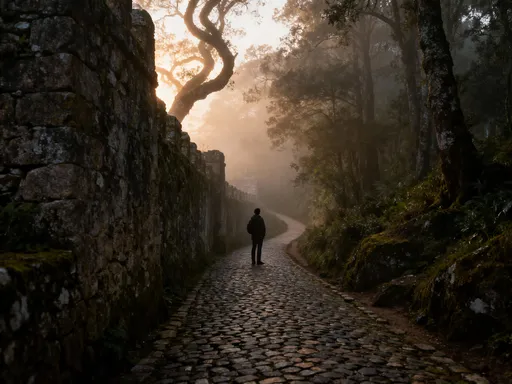
Another strategy is to approach from alternative routes. Hiking up from the backside via the forest trails from Vale de Silvares offers a more immersive, less crowded path. Though steeper and less accessible for some, this route allows travelers to experience the palace as part of a natural landscape rather than a standalone attraction. It also provides panoramic views along the way, turning the journey itself into a highlight. For those who must take the shuttle, purchasing tickets online in advance and choosing the earliest available time slot significantly reduces wait times. The goal is not to avoid Pena Palace, but to experience it on your own terms—mindfully, deliberately, and with space to breathe.
Old Town Confusion: Getting Lost in the Maze of Shops and Streets
Sintra’s historic center, with its cobbled lanes and pastel storefronts, is undeniably charming. It invites slow wandering, café stops, and spontaneous discoveries. Yet beneath this quaint surface lies a labyrinth that can easily disorient even seasoned travelers. The streets twist and climb with little logical pattern, often doubling back on themselves or ending abruptly at private residences. Signage is minimal, and maps—whether digital or printed—struggle to keep up with the irregular layout. What feels like progress may simply be looping through the same block with different window displays.
Adding to the confusion is the sheer density of commercial activity. Nearly every ground-floor space has been converted into a shop catering to tourists. While some offer genuine local crafts—hand-painted tiles, linen tablecloths, or traditional sweets like queijadas—many sell mass-produced imports with no connection to Portuguese culture. Prices vary wildly, with little transparency, and bargaining is uncommon. Visitors unfamiliar with local products may spend more than necessary, only to realize later that the same item is available elsewhere for half the price.
The heart of the old town, Praça da República, serves as both a central hub and a potential trap. Surrounded by cafés and kiosks, it’s a natural meeting point, but its open space quickly fills with crowds, especially on weekends. From here, multiple alleys radiate outward, each promising access to a different attraction—yet few lead directly or efficiently. The so-called “shortcut” to Quinta da Regaleira, for example, is often little more than a steep, uneven staircase with no handrails, unsuitable for those with strollers or mobility issues.
To navigate this maze effectively, travelers should anchor themselves to a few key landmarks. The Sintra Museum of History and Art, housed in the medieval town hall, offers not only cultural insight but also a reliable reference point. The Church of São Pedro, with its distinctive bell tower, is visible from several vantage points and can help with orientation. Using these fixed locations as guides, rather than relying solely on GPS, improves spatial awareness. Additionally, carrying a simple paper map—available at the tourist office—can be more reliable than a phone signal, which often drops in the narrow streets.
For those seeking authenticity, the trick is to look beyond the main thoroughfares. Just one block off the central plaza, quieter lanes reveal family-run bakeries, flower stalls, and small grocery stores where locals shop. These pockets of daily life offer a more genuine connection to the town. Visiting early in the morning, when deliveries arrive and shopkeepers are setting up, provides a rare glimpse behind the tourist façade. The goal is not to avoid the center altogether, but to move through it with intention, recognizing when you’re being funneled into commercial zones and when you’re discovering something real.
The Myth of Walkability: Understanding District Distances and Terrain
Sintra is often described as walkable—a compact destination where everything is within a short stroll. This claim, while well-intentioned, overlooks the reality of its topography. The town is built across a series of steep hills, with attractions scattered across elevations that can differ by hundreds of feet. What appears as a ten-minute walk on a map often becomes a twenty- to thirty-minute climb, especially in summer heat. The cobbled streets, though picturesque, are uneven and slippery when wet, posing challenges for those with joint issues or limited stamina.
Consider the distance between the train station and Quinta da Regaleira—a journey many assume is simple. While only about 1.5 kilometers apart, the route involves a steady uphill grade, with few resting spots. For families with young children or older travelers, this trek can be exhausting before the day has truly begun. Similarly, the path from Pena Palace to Monserrate Palace, though scenic, covers nearly three kilometers through forest trails that are poorly marked and occasionally muddy. Without proper footwear and preparation, such walks become more burden than pleasure.
Public transportation offers alternatives, but options are limited. The 434 tourist bus connects major sites, including the palace, Quinta da Regaleira, and the center, running in a loop. However, it operates on a fixed schedule and can be crowded, especially midday. The 435 bus serves more peripheral areas but runs less frequently. Taxis are available but can be expensive for short hops, and tuk-tuks—though popular—often charge premium rates and may not follow regulated pricing. For travelers with time and energy to spare, walking between nearby sites can be rewarding. But for those prioritizing comfort and efficiency, strategic use of transport is essential.
A balanced approach combines walking with selective rides. For example, taking a tuk-tuk or taxi to Pena Palace in the morning saves energy for exploration, then walking down through the forest to Quinta da Regaleira turns the descent into an enjoyable, low-effort journey. Similarly, using the 434 bus to reach Monserrate and walking back toward town allows travelers to experience the landscape without overexertion. The key is to plan movements around elevation and rest, not just distance. Sintra’s beauty lies in its natural setting, but respecting its physical demands ensures that enjoyment isn’t sacrificed for the sake of a map’s promise.
Quinta da Regaleira: Esoteric Beauty or Overrated Detour?
Among Sintra’s many estates, Quinta da Regaleira stands out for its mystique. Its Initiation Well—a spiral staircase descending into the earth—has become an iconic image, symbolizing the town’s romantic, almost spiritual aura. The gardens, filled with grottoes, fountains, and symbolic architecture, invite contemplation and slow exploration. Yet for all its allure, Quinta da Regaleira is not universally beloved. Some visitors find it underwhelming, citing high ticket prices, uneven maintenance, and a lack of clear interpretation. The question arises: is it a must-see, or a detour better suited to certain travelers?
The estate’s value depends largely on personal interest. Those drawn to symbolism, Freemasonry, or Romantic-era philosophy often find deep resonance in its design. Every element—from the placement of statues to the alignment of pathways—was intended to reflect spiritual journeys and esoteric ideals. For these visitors, a guided tour or a well-researched audio guide can transform the experience from a simple garden walk into a meaningful narrative. However, without this context, the site can feel like a collection of oddities with little explanation.
Crowds also impact the experience. While never as packed as Pena Palace, Quinta da Regaleira sees steady traffic, particularly around the Initiation Well. Visitors often wait in line to descend the narrow staircase, reducing the sense of solitude the site was meant to inspire. The surrounding paths, though beautiful, can become congested during peak hours, making quiet reflection difficult. Arriving early or late in the day improves both comfort and atmosphere.
Maintenance varies across the property. Some areas are impeccably kept, with lush greenery and clean stonework. Others show signs of wear—cracked tiles, overgrown shrubs, or faded paint on the chapel. This inconsistency can detract from the overall impression, especially for those expecting museum-level preservation. Still, the estate’s unique character and serene corners—like the Lake of Nymphs or the Gothic Ruin—offer moments of genuine beauty. Whether it’s worth the visit depends on your travel style: if you appreciate layered history and symbolic landscapes, Quinta da Regaleira is a highlight. If you prefer grand architecture or straightforward sightseeing, it may feel like a distraction.
Beyond the Center: Discovering Underrated Neighborhoods and Local Life
Most tourists confine their visit to the central triangle: the train station, Pena Palace, and Quinta da Regaleira. But Sintra extends far beyond this circuit. Neighborhoods like São Pedro de Penaferrim and Arribas offer a different rhythm—one defined by daily routines, local markets, and residential charm. Here, life unfolds away from cameras and crowds. Children walk to school along tree-lined avenues, neighbors chat outside corner shops, and laundry flutters from apartment balconies. These areas don’t appear in brochures, yet they reveal the soul of the town.
São Pedro de Penaferrim, located just east of the historic center, is home to the town’s parish church and several family-run cafés. The Igreja de São Pedro, with its simple stone façade and peaceful courtyard, hosts regular services and community events. Nearby, pastelarias serve fresh pastries and strong coffee to locals who stop in between errands. The pace is slower, the interactions more genuine. Walking these streets, one begins to see Sintra not as a destination frozen in time, but as a living community adapting to change.
Arribas, nestled along the southern slopes, offers green spaces and scenic overlooks with minimal foot traffic. Residential homes blend into the landscape, many with walled gardens and flowering vines. Trails connect to larger parks like Parque da Liberdade, where families picnic and dogs roam freely. These areas provide balance—a counterpoint to the intensity of the main attractions. They remind visitors that Sintra is not just a place to be consumed, but to be experienced with respect and presence.
Exploring these neighborhoods requires no special ticket or timed entry. A simple shift in mindset—away from checklist tourism and toward observation and connection—opens new possibilities. Sitting at a local café, shopping at a neighborhood market, or following a resident’s path through a quiet alley can yield richer memories than any photo from a crowded terrace. The goal is not to reject the famous sites, but to complement them with moments of stillness and authenticity.
Putting It All Together: Crafting a Smarter, More Rewarding Sintra Experience
Experiencing Sintra fully means moving beyond the postcard and embracing its complexities. The town is not a single attraction, but a tapestry of places, each with its own demands and rewards. A smarter visit begins with planning: researching opening times, purchasing tickets in advance, and mapping movements according to elevation and crowd patterns. It means accepting that not every site will resonate equally—and that’s okay. Prioritizing personal interests over social media trends leads to more meaningful engagement.
A balanced itinerary might start with an early visit to Pena Palace, followed by a descent through forest trails to Quinta da Regaleira, allowing for physical ease and scenic variety. After a late lunch in the old town—perhaps at a lesser-known café off the main square—travelers can explore São Pedro de Penaferrim or Arribas in the afternoon, ending the day with a quiet walk through residential streets as the light fades. Using public transport strategically preserves energy, while leaving room for spontaneity ensures the trip doesn’t feel rigid.
Mindful travel is the ultimate goal. This means observing not just the beauty, but the context—the lives of those who call Sintra home, the wear on historic stones, the balance between preservation and progress. It means resisting the urge to capture every moment through a lens and instead allowing space for presence. Sintra’s magic is real, but it reveals itself slowly, to those who move with patience and curiosity. By understanding its hidden districts, logistical realities, and quiet corners, travelers gain not just memories, but insight. And in that depth, the fairy tale becomes something even more valuable: a place truly known.