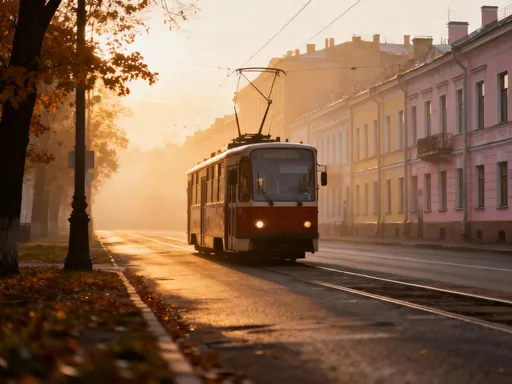
You Won’t Believe What I Found in Tampere – Architecture That Feels Alive
Walking through Tampere, I didn’t expect to be stopped in my tracks by buildings that feel like they’re whispering stories. From red-brick industrial giants to sleek modern designs, the city’s architecture is a quiet masterpiece. It’s not just about looks—each structure carries history, purpose, and soul. If you think Finland is only about forests and lakes, wait until you see how Tampere blends old and new in ways that surprise and inspire. This isn’t a city that shows off; it invites you in, step by step, to discover a deeper rhythm beneath its streets and facades. Here, architecture isn’t frozen in time—it breathes, evolves, and connects people across generations.
First Impressions: Stepping Into a City Built on Water and Stone
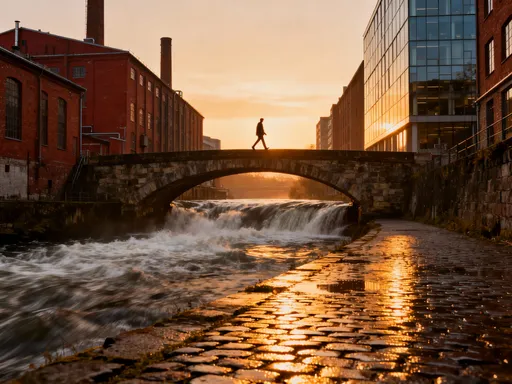
Tampere greets visitors with a presence shaped by nature and necessity. As travelers cross the Tammerkoski rapids—either on foot over the Hämeensilta bridge or by tram gliding above the churning water—they immediately sense the city’s energy. The rapids are not just a scenic feature; they are the reason Tampere exists. In the late 18th century, this powerful current drew entrepreneurs seeking hydropower for mills and factories, laying the foundation for Finland’s first industrial city. Unlike Helsinki’s coastal elegance or Turku’s medieval charm, Tampere’s urban layout is defined by a narrow isthmus between two vast lakes—Näsijärvi and Pyhäjärvi. This geographical squeeze has created a compact, walkable core where every building seems to press close, forming a dialogue between stone, steel, and water.
The city’s topography plays a subtle but vital role in how its architecture unfolds. Streets slope gently downward toward the rapids, guiding the eye and foot traffic through a layered urban tapestry. Buildings rise along these inclines with a sense of intention, as if each was placed to honor the land’s natural contours. What strikes most is the absence of architectural indifference. Even utilitarian structures carry design care, from arched entryways to thoughtfully proportioned windows. There’s a coherence to the cityscape—not uniformity, but harmony. This is not a place assembled haphazardly over time, but one that grew with purpose, responding to both geography and human need.
For a visitor accustomed to grand European capitals, Tampere may seem understated at first. There are no sweeping boulevards or towering monuments designed to impress. Instead, the city reveals itself gradually—through the warmth of sunlit brick, the rhythm of rooftops against the sky, the way light reflects off the canal in the early morning. It’s a city best experienced on foot, where every turn offers a new perspective. The initial impression is one of quiet confidence: Tampere does not need to shout to be heard. Its architecture speaks in a language of balance, resilience, and quiet beauty.
Red Bricks and Industrial Soul: The Legacy of Finland’s Manchester
Tampere’s identity is inseparable from its industrial past. Dubbed the “Manchester of the North” in the 19th century, it was here that Finland’s textile and metal industries took root, powered by the relentless flow of the Tammerkoski. Rows of red-brick factories, built to last, still dominate the city center. These are not relics hidden behind glass; they are living parts of daily life. The Finlayson factory complex, established in 1820 by a Scottish entrepreneur, stands as a prime example. Once a hive of looms and spinning machines, it now houses boutiques, cafes, art galleries, and even a small hotel. Walking through its arched corridors, one can still feel the weight of history—the echoes of labor, innovation, and community that built a city.
These industrial buildings were designed with both function and dignity. Thick brick walls, large windows to maximize daylight, and sturdy timber beams reflect a time when craftsmanship mattered even in utilitarian spaces. What makes Tampere’s adaptive reuse so remarkable is its sensitivity. Renovations preserve original features—exposed brick, iron columns, vintage signage—while integrating modern amenities. The Plevna building, once a dyeing facility, now hosts one of the city’s most beloved restaurants, where diners enjoy meals under high ceilings that once hummed with machinery. This seamless blending of eras creates a layered experience, allowing visitors to inhabit history without sacrificing comfort.
The emotional resonance of these spaces is profound. For many residents, especially those with family ties to the factories, these buildings are more than architecture—they are memory. Grandparents who worked the night shift, parents who met on factory floors, children who played in nearby courtyards—these stories are embedded in the walls. Today’s visitors, whether locals or tourists, become part of that ongoing narrative. The city does not treat its past as something to be preserved in a museum case; it invites people to live within it, to add their own chapter. This continuity is rare and deeply moving.
Between Old and New: Where Heritage Meets Modern Design
One of Tampere’s greatest strengths is its ability to balance preservation with progress. In many cities, new construction risks overshadowing or clashing with historic districts. In Tampere, the conversation between old and new feels intentional, even poetic. A striking example is the area surrounding Tampere Cathedral. Completed in 1907 in the National Romantic style, the cathedral features rugged stone walls, folk-inspired carvings, and a serene green dome. Just steps away, the modern Tampere City Library—Metso, shaped like a flying bird—rises in smooth white curves. At first glance, the contrast seems bold, even jarring. Yet, over time, the two structures come to feel like complementary voices in a shared urban chorus.
This harmony is no accident. Tampere’s urban planning policies emphasize contextual sensitivity. New buildings are encouraged to respond to their surroundings—through scale, materiality, or proportion—without mimicking the past. The Pyynikintori area, for instance, blends early 20th-century wooden villas with contemporary apartment blocks that echo traditional gabled roofs in minimalist form. Glass facades reflect the sky and treetops, creating a sense of lightness that contrasts with, yet respects, the solidity of neighboring brick structures. The result is a cityscape that evolves without erasing.
Architectural dialogue extends beyond individual buildings to entire neighborhoods. The Amuri district, once home to factory workers, now features restored wooden houses alongside new residential developments that incorporate shared courtyards and green spaces. This approach ensures that modernization does not mean displacement. Instead, growth is inclusive, allowing long-time residents to remain while welcoming new ones. For visitors, this creates a richer experience—one where history isn’t cordoned off but lives alongside the present. Tampere proves that progress need not come at the cost of identity.
Concrete, Glass, and Green: Sustainable Architecture in Action
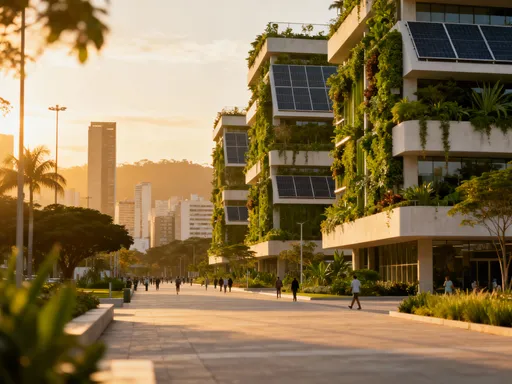
Sustainability is not a buzzword in Tampere—it is a built-in principle. The city has committed to becoming carbon neutral by 2030, and its architecture reflects this ambition. From energy-efficient retrofits to pioneering new construction, Tampere is shaping a future where buildings serve both people and the planet. One of the most visible examples is the Pyynikki area, where passive housing developments use advanced insulation, solar panels, and heat recovery systems to minimize energy use. These homes are not hidden on the outskirts; they are integrated into the urban fabric, proving that eco-friendly living can be both practical and beautiful.
Materials matter deeply in Tampere’s green architecture. Wood, a renewable resource abundant in Finland, is used extensively—not just in traditional forms, but in modern engineered products like cross-laminated timber (CLT). The Tampere Central Square renovation incorporated local wood in benches, shelters, and even temporary installations, reinforcing a connection to regional forests. Even concrete, often seen as environmentally costly, is being reimagined. Some new buildings use recycled aggregates and low-carbon cement mixes, reducing their footprint without compromising strength.
Beyond individual buildings, the city’s infrastructure supports sustainable living. Bike lanes crisscross the center, public transit runs on renewable energy, and green roofs help manage stormwater while providing habitat for birds and insects. The Hiedanranta district, a former industrial port being transformed into a smart urban neighborhood, exemplifies this vision. Planned with input from residents and experts, it will feature energy-positive homes, circular water systems, and AI-assisted waste management. This is not futuristic fantasy—it is real, measurable progress. For families and older adults alike, these changes translate into cleaner air, quieter streets, and healthier communities. Tampere shows that sustainability is not a sacrifice, but an enhancement of daily life.
Hidden Details: The Craftsmanship You Almost Miss
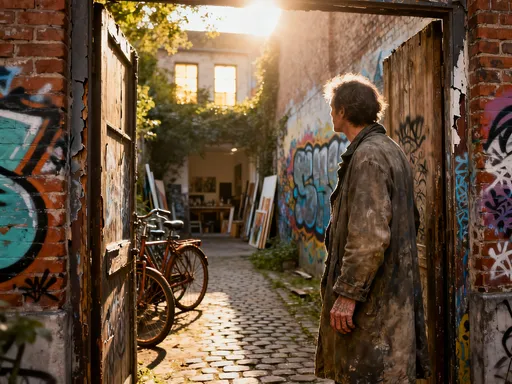
The true magic of Tampere’s architecture often lies in the details—small, deliberate choices that reward slow observation. On a rainy afternoon, standing beneath an awning on Keskustori, one might notice the intricate ironwork of a lamppost: swirling vines forged in metal, a nod to Finnish nature. Or while waiting for a friend outside a café in the Finlayson district, a glance upward might reveal a carved stone face peering down from a cornice—a whimsical guardian from another era. These are not accidents; they are expressions of pride, of artisans who believed even unseen corners deserved beauty.
Tiles, too, tell stories. In the entrance of a 1910 apartment building, hexagonal ceramic tiles in deep blue and forest green form a geometric pattern that feels both modern and timeless. Inside the Tampere City Hall, mosaic floors depict local flora—lingonberries, pinecones, birch leaves—embedded in stone. These motifs are subtle, easy to overlook in a rush, but they create a sense of belonging. They say: this place was made for you, with care. For women who appreciate the quiet labor of creation—whether in cooking, gardening, or raising children—these details resonate deeply. They reflect a worldview where patience, precision, and love are woven into the everyday.
Architectural storytelling also appears in color and texture. Many historic buildings feature hand-painted window frames in soft ochre, sage, or coral—colors chosen not for trendiness, but for their ability to warm the long winter months. The contrast between rough brick and smooth stucco, between aged copper roofs and crisp glass, adds tactile richness. These layers invite touch, even if only in the mind. To walk through Tampere is to be gently reminded that beauty is not always loud or grand. Sometimes, it is a single carved leaf on a downspout, a perfectly placed window that frames a view of the lake, a door handle shaped like a wave. These are the moments that linger.
Public Spaces Designed for People, Not Just Looks
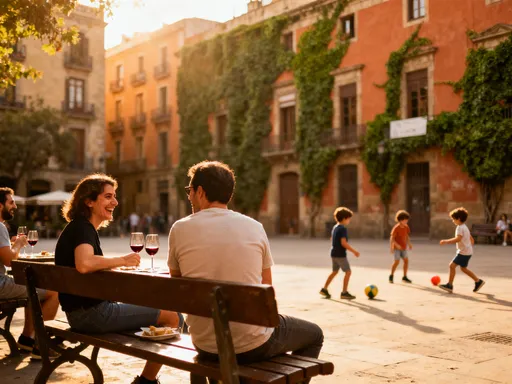
Tampere’s architecture succeeds not just in buildings, but in the spaces between them. Plazas, staircases, courtyards, and promenades are designed with human experience in mind. The Market Square (Kauppatori), for example, is more than a place to buy fresh berries or handmade crafts. Its gently sloping stone surface, ringed by cafes with outdoor seating, encourages lingering. Benches face the water, inviting conversation or quiet reflection. Even in winter, when the square is dusted with snow and lit by warm lanterns, it remains a hub of life—parents pushing strollers, elders meeting for coffee, children chasing pigeons.
Streets are scaled to pedestrians, not cars. Narrow lanes like Fabianinkatu limit vehicle speeds, making walking safe and pleasant. Green courtyards, tucked behind main streets, offer hidden oases. In the Amuri Quarter, a network of shared inner yards connects homes, allowing neighbors to interact naturally. These spaces foster community in a way that high-rise isolation cannot. For families, such design means children can play within sight of home; for older adults, it means accessible, inviting places to gather. Architecture here is not about monuments to power or wealth, but about dignity in daily life.
Transit areas also reflect this people-first philosophy. The Tampere Bus Station and railway terminal were renovated to be bright, open, and easy to navigate. Natural light floods through glass walls, wayfinding is clear, and seating is ample. Unlike sterile transport hubs elsewhere, these spaces feel welcoming, even humane. A mother with a stroller, a traveler with luggage, an elderly couple on a day trip—all can move through with dignity. This attention to detail signals a deeper value: that every person matters. In a world where cities often feel impersonal, Tampere offers a different model—one built on empathy, inclusivity, and care.
Why Tampere’s Architecture Deserves More Than a Passing Glance
Tampere’s built environment does more than house people—it shapes how they feel. There is a quiet emotional intelligence in its design. The way sunlight hits a red-brick wall in the late afternoon, the sound of footsteps echoing in a stone arcade, the sight of children drawing with chalk on a shared courtyard pavement—these moments accumulate into a sense of belonging. For women who have spent years creating warmth and stability in their homes, Tampere’s architecture feels familiar, even comforting. It reflects the same values: care, continuity, resilience.
What sets Tampere apart is its refusal to choose between past and future. It does not tear down to rebuild, nor does it freeze time in amber. Instead, it listens—to its history, its people, its landscape—and responds with thoughtful, evolving design. This quiet confidence is rare. In an age of flashy skyscrapers and disposable construction, Tampere stands as a reminder that cities can grow with grace. Its architecture is not about ego, but about service: to community, to memory, to the earth.
For travelers seeking depth, Tampere offers a different kind of journey. It does not rely on postcard landmarks or Instagrammable backdrops. Its power lies in the in-between moments: a conversation over coffee in a converted factory, a walk along the rapids at dusk, the discovery of a hidden courtyard blooming with flowers. These experiences are not sold; they are uncovered. They require time, presence, and a willingness to look closely. But for those who do, the reward is profound—a city that doesn’t just welcome you, but speaks to you, brick by brick, detail by detail, heart to heart.
Tampere doesn’t shout its beauty—it reveals it slowly, brick by brick, through quiet courtyards and thoughtful designs. Its architecture isn’t just functional; it’s a living dialogue between eras, industries, and ideas. For anyone seeking destinations with depth, Tampere proves that the most memorable journeys are often guided not by landmarks, but by the spaces in between.