Why Are We Still Feeling Disconnected in Virtual Workspaces?
You log into yet another online meeting, camera on, smile ready—but something feels off. Despite all the screens and chat boxes, it’s hard to truly connect. We’ve mastered the logistics of remote collaboration, yet loneliness lingers. What if the tools we’re using could do more than organize tasks? What if they could help us feel seen, heard, and closer—even from miles apart? It’s not about downloading a new app or upgrading your headset. It’s about seeing the tech we already use in a whole new light. What if your digital whiteboard wasn’t just for planning projects—but for sharing a laugh, a thought, or a quiet moment of care?
The Hidden Gap in Remote Collaboration
Let’s be honest—working from home sounded like a dream at first. No more rushed mornings, no commuting, and the freedom to wear comfy clothes all day. But over time, something changed. That dream started to feel a little lonely. You’re online all day, typing messages, hopping from one video call to the next, yet you might go hours without feeling truly seen. It’s strange, isn’t it? We have more tools than ever to stay connected, but the emotional connection often feels thin, like a signal that’s just out of range.
The truth is, we’ve built our virtual workspaces for efficiency, not emotion. We’ve focused on getting things done—quick chats, task lists, shared calendars—but we’ve forgotten that work is also about people. And people need more than bullet points. We need to feel acknowledged, appreciated, and part of something bigger. That sense of belonging doesn’t come from a perfectly organized spreadsheet. It comes from moments—small, human moments—that remind us we’re not alone.
Here’s the good news: the tools we already use can help. Think about your favorite online whiteboard app. You probably use it to map out a project timeline or sketch a flowchart. But what if it could do more? What if it could also be a place where someone leaves you a little note that says, “You’ve got this!” or where your team shares a quick doodle that makes you laugh? The technology hasn’t changed—but the way we use it can. And that shift starts with intention. Instead of asking, “How can this tool help me finish faster?” we can ask, “How can this tool help us feel closer?” That small change in mindset opens up a whole new world of possibility.
Beyond Diagrams: Whiteboards as Emotional Canvases
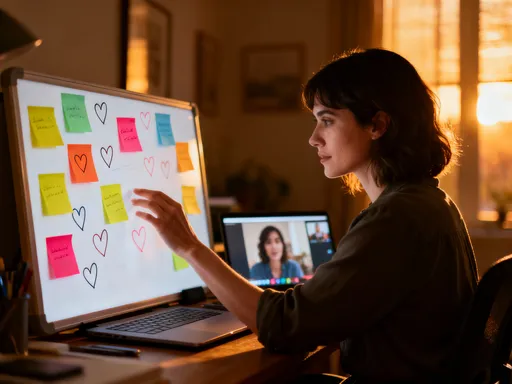
Imagine this: you open your team’s shared whiteboard, and there, in the corner, is a little cartoon sun with a smiley face. Under it, a sticky note reads, “Hope your day is going well, Sarah!” You didn’t expect it, but it makes you pause. For a second, the screen doesn’t feel cold or technical—it feels warm. Human. That’s the power of using a digital space not just for work, but for connection.
We often think of whiteboards as tools for serious business—strategy sessions, brainstorming, planning. But they can also become emotional canvases, places where care shows up in small, unexpected ways. A team member might draw a tiny heart next to your name during a meeting. Someone else might leave a funny meme or a quick sketch of a coffee cup with the words, “Fueling up for the week!” These aren’t distractions. They’re tiny acts of kindness that build trust and belonging.
Think about how you decorate your kitchen fridge at home. Photos, notes, drawings from the kids—it’s not about organization. It’s about creating a space that feels like *you*. Now imagine bringing that same energy to your digital workspace. One team I know started a “gratitude corner” on their whiteboard. Every Monday, each person adds one thing they’re thankful for—big or small. “Grateful my dog slept through the night,” one says. Another writes, “Thanks, Mark, for helping me with that report.” It takes two minutes, but it sets a tone of warmth for the whole week.
These gestures matter. They signal that we’re not just coworkers—we’re people who care about each other. And the best part? They don’t require extra meetings or big gestures. Just a few seconds of thoughtfulness, shared in a space everyone sees. Over time, these small moments add up. They turn a sterile digital board into a living, breathing space where people feel seen.
The Power of Asynchronous Presence
One of the hardest things about remote work is the silence. In an office, you’d hear someone humming, see a light on in a coworker’s room, or catch a quick smile in the hallway. Those tiny signals tell you, “You’re not alone.” But online, when everyone’s offline, it can feel like the whole team has disappeared.
That’s where asynchronous presence comes in. It’s not about being online at the same time. It’s about leaving little traces of yourself in shared spaces, so others can feel your presence even when you’re not there. And digital whiteboards are perfect for this. Imagine opening the board and seeing a hand-drawn checklist someone started earlier. Or a color-coded mood update—green for “great,” yellow for “meh,” red for “need a break.” You don’t need a message. The visual cue says it all.
It’s like leaving a light on in the kitchen for someone. You don’t have to be there to show you care. One mom on a remote team shared how she uses the whiteboard to “check in” with her team before school pickup. She draws a little backpack and writes, “Off to get the kids—back in an hour!” It’s not a formal status update. It’s a way of saying, “I’m still part of this team, even when I’m being a mom.” And her teammates respond in kind—adding a heart, a wave, or a “have fun!”
These small, visual updates create a rhythm of presence. They help us feel connected without the pressure of being “on” all the time. You don’t have to be on camera or typing fast to be part of the team. Sometimes, just seeing a familiar doodle or a friendly note is enough to remind you that you belong. And for working parents, caregivers, or anyone juggling multiple roles, that sense of quiet connection can be a lifeline.
Turning Meetings into Moments of Belonging
Let’s talk about virtual meetings. How many have you been in where everyone jumps straight into the agenda? “Okay, first item—budget review.” And just like that, the human part of the room gets skipped. It’s efficient, sure. But it’s also exhausting. After a while, it starts to feel like we’re just voices on a screen, not real people with lives, feelings, and stories.
What if we changed that? What if the first five minutes of every meeting weren’t about tasks—but about people? Using the whiteboard as a shared journal can make that happen. At the start of the call, the facilitator might say, “Everyone, take a moment to drop an emoji on the board that shows how you’re feeling today.” And suddenly, the screen comes alive. A sun, a cloud, a coffee cup, a sleepy face. No words needed. But just like that, the team gets a glimpse into each other’s worlds.
One team I worked with started using “sketch check-ins.” Instead of saying how they are, team members draw a quick image—maybe a mountain for “feeling strong,” or a boat on rough water for “a bit overwhelmed.” It’s playful, it’s personal, and it opens the door for real conversation. Someone might say, “I see you drew a storm—want to talk about it?” And in that moment, the meeting shifts from transactional to human.
These small rituals don’t waste time—they save it. When people feel seen and safe, they show up better. They speak up more, collaborate more, and handle stress with more grace. Psychological safety isn’t built in big moments. It’s built in tiny, consistent ones—like a shared doodle, a funny emoji, or a quiet “me too” on the board. And when we make space for that, our meetings don’t just get more productive. They get more meaningful.
Families and Friends Reimagined: Not Just for Work
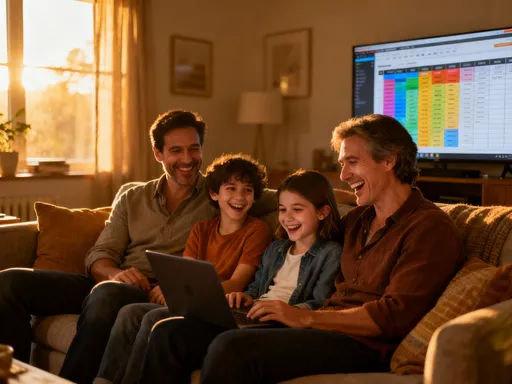
Here’s something I didn’t expect—digital whiteboards aren’t just for work. I started using one with my sister to plan our family reunion. We live in different states, and coordinating with six aunts, three cousins, and two grandmas was a mess. But when we moved the planning to a shared board, everything changed. We added sticky notes with food ideas, drew little icons for games, and even sketched a mock-up of the backyard setup. My niece added a dancing emoji that made us all laugh. It wasn’t just planning—it was bonding.
And it’s not just for big events. One mom told me she uses a whiteboard app to help her kids collaborate on school projects with their grandparents. Her son was working on a family history report. Instead of just sending emails back and forth, they created a shared board. Grandma added old photos, Grandpa wrote little stories about growing up, and the kids drew timelines and added voice notes. It wasn’t just a school assignment—it became a family treasure.
Another woman uses a digital board with her book club. Every week, they post quotes, drawings, or questions from the book. It’s not about getting it “right.” It’s about sharing how the story made them feel. One month, after reading a novel about loss, someone drew a simple tree with leaves labeled “love,” “memories,” “hope.” No words. Just emotion. And it brought the whole group closer.
The magic isn’t in the technology. It’s in the intention. When we use these tools to include, to listen, to create together, they become more than apps. They become bridges. They help us stay close to the people who matter—even when life pulls us apart. And for families spread across cities, or friends who rarely get together, that connection is priceless.
How to Start Small: Simple Rituals That Stick
You don’t need a big overhaul to make this work. In fact, the best changes start small. Think about one tiny habit you could add to your daily routine. Maybe it’s creating a “mood corner” on your team’s whiteboard where everyone shares how they’re feeling each morning with a color or emoji. Or starting a weekly doodle challenge—“Draw your favorite snack in 30 seconds!” It doesn’t have to be perfect. It just has to be human.
One team began a “gratitude board” where each person adds one thing they’re thankful for every Friday. It takes less than a minute, but it ends the week on a warm note. Another group started leaving “coffee chat” invites as little cup icons on the board. No pressure to respond. Just an open invitation to connect when someone has time.
The key is consistency, not complexity. Pick one small practice and stick with it for a few weeks. You’ll be surprised how quickly it becomes part of your rhythm. And don’t worry if it feels awkward at first. That’s normal. We’re not used to bringing our full selves to work. But every time you leave a note, draw a smiley, or share a real feeling, you’re helping to change the culture—one small act at a time.
And remember, it’s not about adding more to your plate. It’s about using what you already have in a more meaningful way. You’re already logging into that whiteboard. Why not make it a place that lifts you up, not just a place that tracks tasks?
The Quiet Revolution: Redefining Productivity
We’ve been sold a story about productivity for so long—hustle, speed, efficiency, getting more done in less time. But after years of remote work, many of us are realizing something: we don’t just want to be productive. We want to feel alive. We want to feel connected, valued, and part of something that matters.
True productivity isn’t just about checking boxes. It’s about sustaining energy—emotional, mental, and relational. And when we use our tools to nurture connection, we’re not wasting time. We’re investing in the very thing that makes work worth doing: each other.
That shared doodle, that quiet note, that emoji check-in—they’re not fluff. They’re fuel. They remind us that behind every screen is a person with a story, a heart, and a need to belong. And when we honor that, something beautiful happens. Work doesn’t just get easier. It gets more meaningful. We don’t just finish tasks. We build trust, strengthen relationships, and create spaces where everyone can thrive.
So the next time you log into that virtual meeting, ask yourself: how can I use this space to connect, not just complete? How can I leave a trace of care? Because the future of work isn’t just about smarter tools. It’s about kinder ones. And it starts with you—using what you have, right now, to make someone feel seen. That’s not just good tech. That’s good living.