Tested 8 Video Call Habits with My Siblings: One Small Change That Finally Made Us Feel Close Again
You know that awkward silence during family video calls? We’ve all been there—smiling through the screen, saying “I’m fine,” while feeling further apart than ever. I felt it too, especially with my siblings scattered across different time zones. We kept trying to stay connected, but something was missing. Then, one tiny shift changed everything. No fancy tech, no big promises—just a simple tweak that made us laugh, share, and truly see each other again. It wasn’t about upgrading our cameras or finding the best app. It was about changing how we showed up. And honestly? That small change has brought more warmth into our lives than any high-tech solution ever could.
The Distance That Screens Can’t Measure
For months, we clung to our weekly family video call like it was a lifeline. Every Sunday at 7 p.m., we’d log in—me in my pajamas, my sister in her home office, my brother sometimes still wearing his work hoodie. We’d smile, ask about jobs and kids and weather, and then—silence. That heavy, polite kind of silence where someone has to jump in with a new topic or the call just fades into “Well, I should probably go…” It felt like we were going through the motions, like we were actors in a play called Family Reunion: Remote Edition.
I remember one call when my sister started telling a story about her daughter’s school project. Mid-sentence, her phone buzzed, and without missing a beat, she picked it up, glanced at the screen, and said, “One sec, gotta check this real quick.” That moment hit me hard. Not because she was distracted—honestly, we all do it—but because it made me realize how little emotional space we were giving each other. We were present, technically, but not really there.
And that’s when it clicked: the problem wasn’t the technology. Our Wi-Fi was stable, the audio clear, the video crisp. The tools were working perfectly. But the connection? That was breaking down. We were treating these calls like scheduled meetings—something to check off the list—instead of moments to breathe, to be, to feel like family. I started wondering: what if the way we were using tech was actually getting in the way of the very thing we wanted—closeness?
Why “Just Talking” Isn’t Enough
When we’re together in person, we don’t just sit and talk for an hour straight. Think about it. You visit your sister’s house, and you’re not face-to-face the whole time. You’re in the kitchen helping chop vegetables, or flipping through old photo albums on the couch, or sitting quietly side by side while the kids play. The conversation flows in and out of doing. There’s comfort in that—comfort in the shared space, in the parallel presence, in the unspoken understanding that you’re with someone, even when you’re not speaking.
But on video calls, we’ve turned that natural rhythm upside down. We expect full attention, full engagement, the whole time. No multitasking. No background noise. Just faces in little boxes, performing connection. And that pressure? It’s exhausting. It makes us stiff, self-conscious, and less likely to say anything real. We end up sharing headlines—“Work’s busy,” “The kids are good,” “The dog barked at the mailman again”—but not the quiet worries, the little joys, the everyday moments that actually make up life.
I realized we weren’t missing conversation—we were missing context. We weren’t seeing each other’s worlds. We didn’t know what the light looked like in my brother’s apartment in the morning, or how my sister’s garden smelled after the rain. We weren’t hearing the clink of coffee mugs or the hum of the dishwasher in the background. And without those tiny details, our connection felt thin, like a photo printed on tissue paper. So I started asking myself: how could we bring those small, real moments into our digital lives—without making it another chore?
The Experiment: Trying (and Failing) 7 Different Habits
I decided to treat this like a little family experiment. If one way wasn’t working, maybe another would. So over the next few months, I introduced seven different habits—some fun, some structured, all with good intentions. And honestly? Most of them flopped.
First, I tried themed calls. “Cooking Night” sounded charming—everyone would make dinner while on camera. But in practice, it was chaos. My sister burned her onions because she was laughing at my brother’s apron. I missed a key ingredient because I was trying to hear over the sizzle of the pan. And after 20 minutes, we were all too busy to talk. It felt less like bonding and more like a cooking competition with bad audio.
Then came “Pet Show-and-Tell.” Adorable in theory. In reality? My nephew’s hamster ran under the couch, my brother’s dog barked the entire time, and my cat walked across my keyboard and ended the call. We laughed, sure, but it didn’t deepen our connection—it just gave us something to giggle about for five minutes.
Scheduled check-ins every Sunday? We already tried that. Life got busy. Someone had a sick kid. Another had a work deadline. The guilt of missing the call started to outweigh the joy of being on it. Virtual game nights were next—online trivia, word games, even a digital jigsaw puzzle. But the lag made it frustrating. Someone would answer too early, or the screen would freeze mid-clue. What was supposed to be fun felt like a tech support session.
Watching a movie together was better. We synced up a family-friendly film and used the chat to react. But the magic of shared silence, of laughing at the same moment, was gone. We were watching the same thing, but not together. It felt like parallel loneliness.
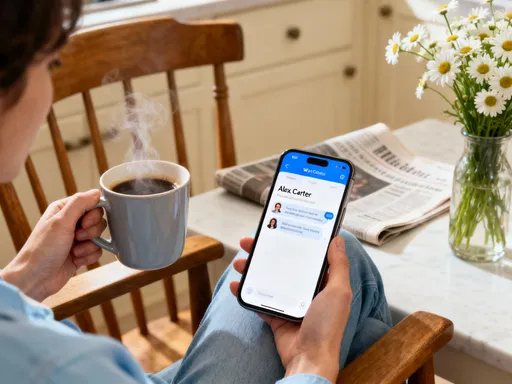
I was ready to give up. Maybe distance just meant we’d never feel as close again. But then, I noticed something small. After one of our calls, my sister sent a quick 45-second video: her pouring tea, the steam rising, her dog curled up in the corner. No caption. No big deal. I watched it three times. And something about it—so quiet, so real—made me feel closer to her than I had in weeks.
The One Habit That Stuck: Asynchronous Mini-Sharing
That little video sparked an idea. What if we stopped waiting for the big call to feel connected? What if we started sharing the in-between moments—the ones we used to see in person but now miss?
So I suggested a new habit: no more pressure to be on camera at the same time. Instead, we’d send short, casual videos or photos whenever something small and real happened. Not performances. Not posed. Just life.
My brother started it. He sent a clip of his dog pulling him down the sidewalk, barking at a squirrel. My sister shared a time-lapse of her planting herbs on her balcony. I sent one of my morning coffee ritual—the kettle whistling, the spoon clinking, the first sip with a satisfied sigh. We didn’t ask for replies. We didn’t expect instant reactions. But we all watched. And we all responded—sometimes with a heart, sometimes with a voice note, sometimes just with silence.
Then, we created a shared digital album using a mainstream photo app—one we already had, no new downloads. Every photo or video we sent automatically uploaded to the album. No extra steps. No passwords to share. Just a quiet, ever-growing scrapbook of our lives.
And something shifted. Suddenly, I knew what my brother’s street looked like in the morning. I heard the sound of my sister’s wind chimes. I saw the way my nephew’s face lit up when he saw a butterfly. These weren’t grand moments. They were tiny. But they were real. And because we were seeing each other’s everyday worlds, when we did finally hop on a live call, it felt different. We weren’t starting from zero. We were already caught up. We could jump straight into, “Oh, I saw your rose bloomed!” or “Your dog looked extra playful today.” The small shares made the big calls feel warmer, easier, more natural.
How We Built a Shared Rhythm Without Scheduling
The beauty of this new rhythm is that it’s not scheduled. It’s not a task. It’s not another item on the to-do list. It’s just… life, lightly shared.
Now, someone might send a 30-second video of their walk to work, the camera pointed at their feet, the sound of city traffic in the background. Another might share a photo of their lunch—nothing fancy, just a sandwich and an apple on a paper plate. I once sent a clip of rain tapping on my window, no talking, just the sound and the gray light. And my sister replied with a voice note: “That sounds exactly like it does here. Feels like we’re in the same storm.”
We use a simple family group on a widely used messaging app—nothing special, nothing new to learn. The key isn’t the platform. It’s the mindset. We’re not performing. We’re not trying to impress. We’re just letting each other peek in.
The rhythm emerged on its own. Share. Acknowledge. Continue. No pressure. No guilt. And over time, the emotional distance started to shrink. We stopped seeing the video calls as the only way to connect. They became just one part of a larger, quieter conversation—one that was already happening in the background of our lives.
I’ve noticed that we’re more patient with each other now. When someone doesn’t reply right away, it doesn’t feel like neglect. We know life is busy. But when they do share, it feels like a gift. And because we’re already seeing glimpses of each other’s days, we don’t need the call to catch up. We can just be.
The Unexpected Side Effects: Lighter Calls, Deeper Talks
Here’s the surprising part: since we started sharing these small moments, our live video calls have gotten better—not because we’re doing more, but because we’re doing less.
We don’t have to force the conversation. We don’t have to ask, “So, what’s new?” because we already know. Instead, we can say, “I saw you got that book you wanted—how’s it going?” or “Your garden looks amazing this week. Did the tomatoes survive the rain?” It feels more personal, more intimate, because we’re building on real details, not generalities.
And because the pressure to perform is gone, we’ve started sharing more meaningful things—without even trying. My brother, who used to just say “Work’s fine,” recently told us about a project that was stressing him out. He didn’t plan it. It just came out after I commented on a video he sent of his office window. “It’s been a tough week,” he said, “but seeing that sunset yesterday helped.” And just like that, we were in it with him—not because we grilled him, but because he felt seen.
My sister opened up about feeling overwhelmed after her kids went back to school. She didn’t make a big deal of it—just mentioned it in a voice note while folding laundry. But because we’d been seeing her little moments all week—the quiet coffee, the late-night reading, the tired smile—we could feel the weight behind her words. We didn’t fix it. We just listened. And that was enough.
These aren’t dramatic breakthroughs. They’re quiet moments of trust. And they’re happening because we’ve built a foundation of small, consistent connection. The daily shares aren’t just about showing what we’re doing—they’re about saying, “I’m here. I’m living. I’m thinking of you.” And that, more than any long call, makes us feel close.
Making It Work for Any Family (No Tech Skills Needed)
You don’t need the latest app. You don’t need perfect lighting or a ring light or a soundproof room. You don’t even need to be tech-savvy. This isn’t about gadgets. It’s about heart.
If you want to try this with your family, start small. Pick one thing—a morning coffee, a walk with the dog, a sunset from your backyard—and share it once this week. Use whatever platform you already use. WhatsApp. iMessage. A shared photo album. It doesn’t matter. What matters is that it feels easy, not like homework.
Turn the camera slightly so we see more than just your face. Show us your kitchen counter, your bookshelf, your view. Let us hear the background noise—the kids laughing, the rain falling, the coffee brewing. Let silence be okay. You don’t have to narrate everything. Sometimes, a 20-second clip of you stirring soup is more powerful than a 10-minute monologue.
And don’t worry about frequency. You don’t need to post every day. Just be real. Be consistent. Let the rhythm find you. Over time, those small, unpolished moments add up to something quiet but powerful: the feeling that you belong, even when you’re miles apart.
I won’t lie—there are still moments when I miss the old days. When I wish I could just walk into my sister’s kitchen and pour myself a cup of tea. But now, when I see her video of that same kitchen, steam rising from the kettle, I feel a little closer. Not the same. But close enough. And sometimes, that’s everything.